Studying harder is not the answer. Studying smarter is. These ten techniques are backed by decades of learning science research and used by the highest-performing students at the world’s best universities — and every single one of them is free to use starting today.
Most students study the wrong way. They re-read their notes, highlight sentences in yellow, and hope that spending more hours at their desk will eventually make the information stick. Research consistently shows that these are among the least effective study methods available — and that a small number of specific techniques produce dramatically better results in significantly less time. This guide covers exactly those techniques.


Active recall means closing your notes and trying to retrieve information from memory rather than reading it again. When you re-read your notes, your brain recognises the information and creates the feeling of knowing it — but recognition is not the same as being able to recall it in an exam. Active recall forces your brain to actually retrieve the information, which strengthens the memory pathway far more powerfully than passive re-reading ever can.
The simplest way to use active recall is to read a section of your notes, close the book, and write down everything you can remember. Then check what you missed. Do this with flashcards, past paper questions, or simply a blank piece of paper. Students who use active recall consistently score significantly higher than those who re-read the same material repeatedly — and they spend less time studying to achieve it.

The forgetting curve is one of the most important discoveries in learning science. It shows that we forget information rapidly after learning it — about 50% within an hour, 70% within a day, and up to 80% within a week if we never review it. Spaced repetition fights this by scheduling reviews at precisely the right intervals — just before you are about to forget something, repeating it extends the memory powerfully.
In practice, spaced repetition means reviewing new material after 1 day, then 3 days later, then 7 days later, then 14 days later. Each successful review pushes the next review further into the future. Apps like Anki and Quizlet handle this scheduling automatically. Students using spaced repetition for vocabulary and facts consistently outperform those using traditional cramming — and the gap widens over time as crammed knowledge fades and spaced knowledge compounds.

The Pomodoro Technique was developed by Francesco Cirillo in the late 1980s and has since become one of the most widely used productivity methods in the world. The principle is simple: set a timer for 25 minutes, work with complete focus on one task until the timer rings, then take a 5-minute break. Every four cycles, take a longer 20–30 minute break. One 25-minute focused session is called one “Pomodoro.”
The reason this works so powerfully for studying is twofold. First, knowing you only have 25 minutes before a break makes starting easier — it removes the daunting feeling of “I have to study for 3 hours.” Second, the breaks allow your brain to consolidate what it just learned rather than fatiguing it with continuous input. Four focused Pomodoros with breaks produce more retained learning than four hours of distracted, continuous studying.

Richard Feynman was one of the greatest physicists of the 20th century and also one of its most gifted teachers. His learning technique is beautifully simple: choose a concept you are trying to learn, and explain it in plain English as if you were teaching it to a child who has never heard of it. Where you struggle to explain it simply — where you find yourself reaching for jargon or getting confused — that is exactly where your understanding has a gap. Go back to your source material and fill that specific gap. Then try explaining it again.
This technique works because it is ruthlessly honest. You cannot fake your way through a simple explanation the way you can fake it when reading notes or highlighting textbooks. The moment you try to explain something simply, you either understand it or you discover you do not. Both outcomes are useful — one confirms your knowledge and the other shows you precisely where to study next.

A mind map starts with your main topic in the centre of a page and branches outward to subtopics, concepts, and details. Unlike linear notes that present information in a fixed sequence, a mind map shows the relationships between ideas visually — how one concept connects to another, which ideas belong together, and where there are gaps in your knowledge. For visual learners in particular, mind maps transform abstract information into something you can literally see and understand at a glance.
Mind maps work especially well for revision because the process of creating them forces you to actively organise information from memory rather than copying it passively from notes. Creating a mind map from memory (active recall) and then checking it against your notes combines two of the most powerful study techniques simultaneously. You can create a mind map with pen and paper in five minutes or use free tools like MindMeister or Coggle online.
Most students study by blocking — spending two hours on maths, then two hours on history, then two hours on biology. This feels productive because you build up momentum within each subject. Research consistently shows, however, that interleaving — alternating between subjects within a single study session — produces significantly better long-term retention even though it feels more difficult and less smooth in the moment.
The reason interleaving works is that switching between subjects forces your brain to reload and retrieve each subject from memory with every switch — essentially providing built-in active recall practice throughout your session. The difficulty you feel when switching is not a sign that interleaving is not working. It is the sign that it is working. Learning that feels hard is usually learning that sticks.
Instead of 2 hours of maths, try: 40 minutes maths → 40 minutes biology → 40 minutes maths. Or use Pomodoro sessions across subjects: Pomodoro 1 = maths, Pomodoro 2 = history, Pomodoro 3 = biology, Pomodoro 4 = maths again. The rotation keeps retrieval active throughout your session.
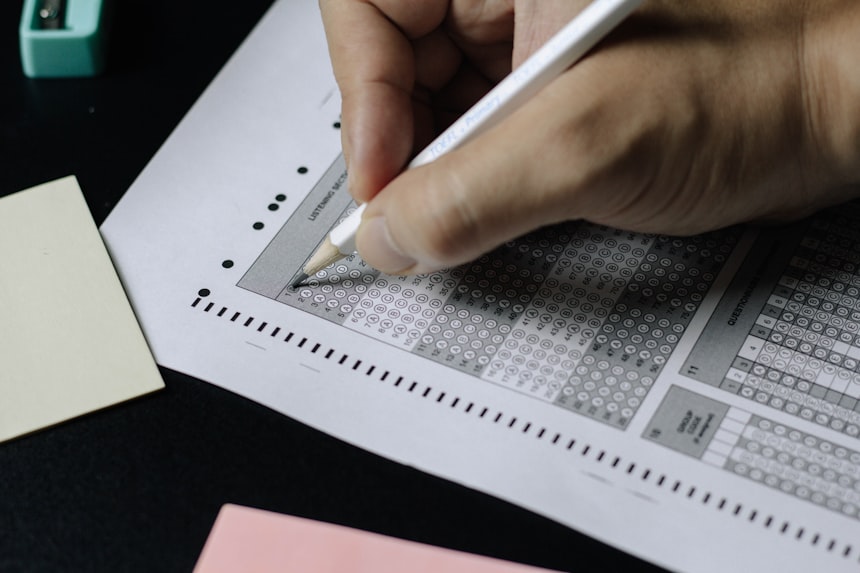
Past paper practice is one of the most consistent predictors of exam success across every subject and every level of education. Not because past questions are repeated — they rarely are. But because working through past papers under timed conditions forces you to retrieve knowledge under pressure, identify which question types you struggle with, practice time management, and understand exactly how the subject is examined. These are skills you simply cannot develop by reading notes.
The key to making past paper practice effective is to do it under realistic conditions. Set a timer. No notes. No phone. Sit at a desk as if it is the real exam. Afterwards, mark your answers rigorously and spend more time reviewing what you got wrong than celebrating what you got right. Getting a question wrong in practice is far more valuable than getting it right — because the correction process strengthens memory far more powerfully than the initial learning did.
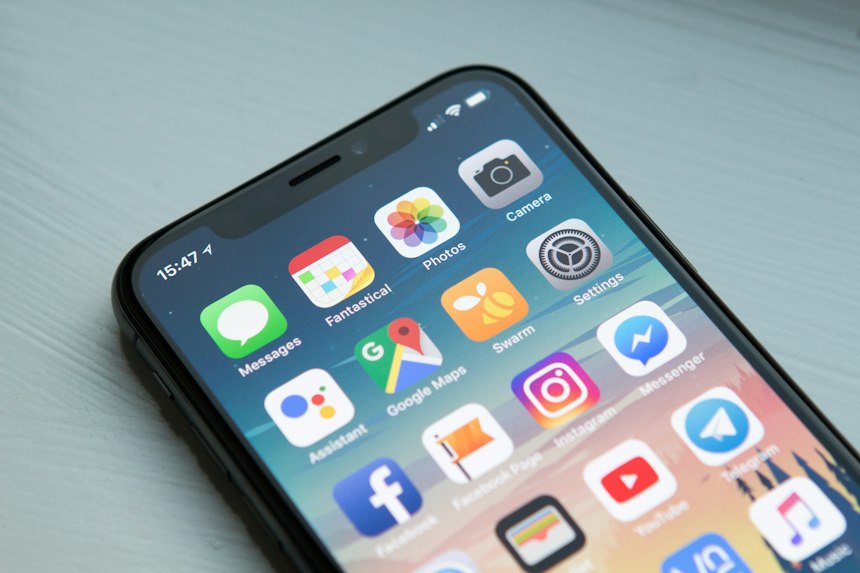
Research by Gloria Mark at the University of California found that after an interruption — even a brief one like glancing at a phone notification — it takes an average of 23 minutes to return to the same level of deep focus you were at before. If your phone buzzes four times during a study session, you may never reach genuine deep focus at all. You can spend three hours at your desk and retain very little because your attention was fragmented the entire time.
The solution is not willpower. Willpower is finite and unreliable. The solution is removing the temptation entirely. Put your phone in a different room before you start studying. Not face down on the desk. Not on silent. In a different room. Studies show that the mere presence of a smartphone on a desk — even face down and silent — measurably reduces cognitive capacity during tasks that require focus.

Sleep is not rest time for your brain — it is active processing time. During sleep, particularly during the deep slow-wave sleep stages, your brain transfers information from short-term working memory into long-term storage. This is the biological process that makes learning permanent. When you stay up all night before an exam, you interrupt this consolidation process and arrive at the exam with a brain that is both sleep-deprived and full of information it never properly stored. The result is exactly as bad as it sounds.
Exercise produces similar benefits through a different mechanism. Physical activity increases blood flow to the brain and triggers the release of BDNF — a protein that promotes the growth of new neural connections. Even 20 minutes of walking before a study session measurably improves memory, attention, and the ability to learn new information. Eight hours of sleep and 20 minutes of daily movement are free, legal, and more effective than any supplement or study drug available.
Students who pull all-nighters before exams consistently perform worse than those who stopped studying at a reasonable time and slept properly. Staying up until 3am studying and arriving at a 9am exam exhausted is almost always counterproductive. Study hard during the day. Sleep properly the night before. Your brain needs the sleep to consolidate what you learned.

Study groups have a complicated reputation because most of them are not actually study groups — they are social gatherings with textbooks present. The key difference between a productive study group and an unproductive one is structure. A productive study group has a clear agenda for each session, specific topics to cover, assigned preparation before the meeting, and a strict time limit on socialising.
The most valuable thing a study group can do that individual study cannot is teach each other. When you explain a concept to someone else, you are using the Feynman Technique naturally — and the person explaining consistently learns the material better than the person being explained to. Rotate who explains each topic so everyone gets the teaching benefit. Quiz each other. Argue about interpretations. Correct each other’s mistakes. An hour of genuine collaborative learning with the right people is worth four hours of individual passive re-reading.
Keep the group small — 3 to 4 people maximum. Everyone must prepare the topic before arriving. Each session has one specific goal. Phones go away for the first 45 minutes. The last 15 minutes are for questions no one could answer alone. End on time. These simple rules transform a social gathering into genuine academic preparation.
Every technique in this list is free, proven by research, and available to any student starting tomorrow. The question is never “which technique is best?” — active recall and spaced repetition consistently come out on top in almost every study. The real question is which techniques you will actually implement and stick with long enough to feel the results.
Start with three: put your phone in another room before you study, test yourself from memory instead of re-reading, and sleep eight hours the night before every exam. Those three changes alone will improve your grades more than doubling your study hours ever would.
Study smarter. Sleep properly. Test yourself constantly. The students who do these three things consistently are the ones who surprise everyone — including themselves — when results come out.


0 Comments