
10 eCommerce Growth Strategies Every Online Store Owner Must Know in 2026
- Strategy 1 — Optimise Your Conversion Rate Before Spending on Traffic
- Strategy 2 — Build a Post-Purchase Email Machine
- Strategy 3 — Make Social Commerce Your Second Storefront
- Strategy 4 — Use AI Personalisation to Increase Average Order Value
- Strategy 5 — Turn Your Best Customers Into Your Sales Force
- Strategy 6 — Master the Subscription Revenue Model
- Strategy 7 — Dominate Your Niche with Content SEO
- Strategy 8 — Reduce Cart Abandonment Systematically
- Strategy 9 — Build a Data-First Customer Retention System
- Strategy 10 — Go International — Your Market Is Bigger Than You Think
- Essential eCommerce Growth Tools
- Frequently Asked Questions
- Final Thoughts from the Author
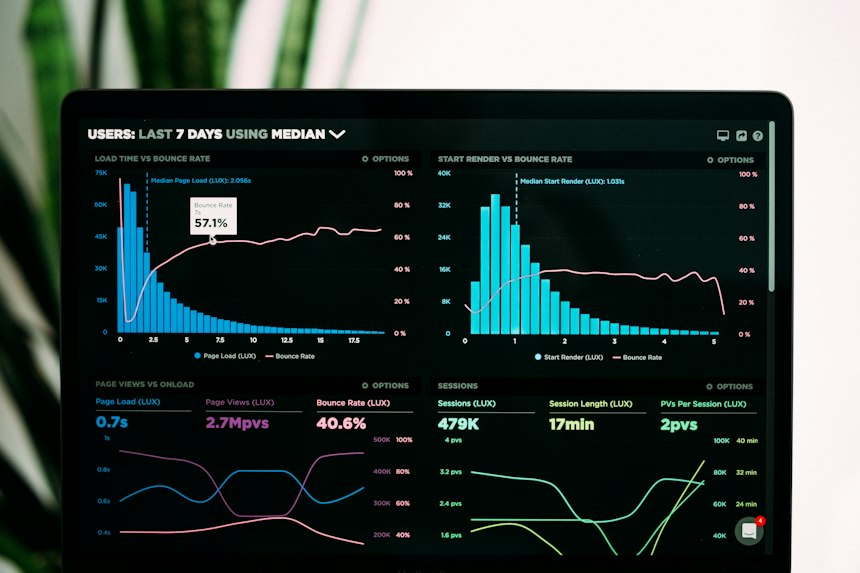
This is the single most important piece of advice I give every new client: before you spend another dollar on advertising, fix your conversion rate. The average eCommerce store converts 1-2% of visitors. If you improve that to 3-4%, you have just doubled your revenue from the exact same traffic. Most store owners instinctively reach for more ad spend when growth stalls — but a store converting at 1.5% that spends $10,000 on ads generates half the revenue of a store converting at 3% spending the same amount. Fix the funnel first, then pour fuel on the fire.
- Product page images: Add a minimum of 6 high-quality images per product including lifestyle shots, scale references, and detail close-ups — stores with 6+ images convert at 40% higher rates
- Social proof above the fold: Display your star rating and review count immediately below your product title — never make customers scroll to find proof
- Urgency without manipulation: Real stock levels ("Only 3 left"), real-time viewer counts, and genuine sale end times increase purchase decisions significantly
- Mobile checkout audit: Complete a purchase on your own store using only your phone — every point of friction you discover is losing you real sales every single day
- Page speed: Every additional second of load time reduces conversions by 7% — compress images, enable lazy loading, and upgrade hosting if needed
Email marketing delivers an average ROI of $36 for every $1 spent — but only when done right. The biggest missed opportunity in most eCommerce businesses is the post-purchase email sequence. After someone buys from you, you have a 60-70% chance of selling to them again — compared to a 5-20% chance of selling to a new prospect. Most stores send one order confirmation email and then go silent for weeks. A properly built post-purchase sequence turns a one-time buyer into a loyal repeat customer through a series of automated, perfectly-timed emails.
- Welcome series (Day 0-3): Brand story, values, what to expect
- Post-purchase (Day 7): Usage tips, style guides, how-to content
- Review request (Day 14): Photo review request with product image
- Upsell (Day 21): Complementary products based on purchase
- Replenishment (Day 30-60): For consumable products only
- Win-back (Day 90): Re-engage with exclusive offer
- Welcome emails: 40-60% open rate (highest of any email type)
- Review request emails: 15-25% review submission rate
- Upsell emails: 8-15% conversion rate from existing buyers
- Win-back campaigns: Recover 10-15% of lapsed customers
- Full sequence: 20-35% increase in customer lifetime value
Social commerce — selling directly through social media platforms — reached $1.2 trillion globally in 2025 and is still the fastest-growing segment of eCommerce. TikTok Shop, Instagram Shopping, and Pinterest Buyable Pins allow customers to discover your products organically through content, then purchase without ever leaving the app. The store owners winning at social commerce in 2026 are not those spending the most on ads — they are those creating the most authentic, helpful, and genuinely entertaining content consistently.

Personalisation is no longer a luxury for enterprise retailers — it is accessible to any eCommerce store through affordable Shopify apps and platform-native tools. Personalised product recommendations increase average order value by 26%, reduce time-to-purchase by 35%, and increase repeat purchase rates by 44%. The mechanics are straightforward: show each customer products related to what they have browsed, bought before, or saved — rather than showing everyone the same generic bestsellers.
- Product page recommendations: "Customers also bought" and "Complete the look" widgets on every product page — place them above the fold on mobile
- Cart upsells: Show a relevant add-on product in the cart before checkout — even a 5% uptake rate on a $20 add-on significantly increases AOV
- Homepage personalisation: Returning visitors see their recently viewed items and personalised category recommendations instead of generic new arrivals
- Post-purchase upsell: Immediately after checkout, offer a one-click add-on at a discount — customers are in buying mode and the friction is lowest
- Email personalisation: Segment customers by category preference, average spend, and purchase frequency — every email segment should feel written for that specific person

Word-of-mouth is the oldest and most effective form of marketing — and referral programmes make it systematic and measurable. Referred customers convert at 4x the rate of non-referred visitors, have 25% higher average order values, and have a 37% higher retention rate over their lifetime. The economics are powerful: instead of paying Facebook or Google to acquire a customer, you pay your existing happy customers a reward for doing the same job — and they do it more credibly than any ad.
- Double-sided: Referrer gets $10, friend gets $10 — most effective structure
- Credit-based: Earn store credit per referral — drives immediate repeat purchase
- Tiered: Unlock better rewards for more referrals — gamification drives viral growth
- Social sharing: Share a post, get a discount — lower commitment, high volume
- ReferralCandy — Shopify/WooCommerce referral platform
- Smile.io — loyalty, referrals, and VIP in one
- Yotpo Loyalty — enterprise referral programme
- Klaviyo flows for post-purchase referral asks

The subscription model is the single most transformative structural change an eCommerce business can make. Subscription businesses are valued at 8x revenue multiples versus 2-3x for transactional businesses — because investors and acquirers pay a premium for predictable, recurring income. More importantly for day-to-day operations: knowing your revenue 30 days in advance changes every decision about inventory, staffing, and marketing. Subscriptions also dramatically increase customer lifetime value, with subscribers spending an average of 3x more over their lifetime than one-time buyers.

Paid advertising stops the moment you stop paying. Content SEO compounds. A single blog post ranking on page 1 of Google for a buying-intent keyword can drive qualified traffic to your store every month for years — with zero ongoing cost. eCommerce stores that invest in content SEO consistently outperform pure ad-spend competitors over a 12-24 month horizon because their customer acquisition cost approaches zero for organic traffic. The content strategy is simple: create the most useful, most comprehensive resource available for the questions your ideal customers are asking Google.
- "Best [product category] for [use case]" — buyer intent
- "How to [problem your product solves]" — informational
- "[Your product] vs [competitor]" — comparison intent
- "[Year] guide to [category]" — evergreen reference
- Case studies: "How [customer] achieved [result]"
- Google Search Console — free, essential
- Ubersuggest — keyword research, free tier
- Ahrefs Webmaster Tools — backlinks, free
- Google Trends — seasonal demand signals

The average eCommerce cart abandonment fee is 70.19% — meaning fewer than 7 out of every 10 customers who add an item to their cart leave without completing a purchase. Globally, this represents $260 billion in recoverable revenue each year. Cart abandonment isn’t always random – customers leave for predictable and treatable reasons. A systematic technique for identifying and reducing the causes of one, combined with computerized treatment sequences, consistently recovers 15-25% of abandoned carts.
📋 System to reduce cart abandonment
Show total price early: 48% of abandonment is the result of incidental spending at checkout — show the shipping price on the product page, not at checkout
Guest checkout: mandatory account verification causes 35% abandonment — Always offer guest checkout as the number one option
Abandoned Cart E Mail (1 hour): "You missed something" subject with product image — 40% open rate, 10-15% renewal rate
Abandoned cart email (24 hours): Add social proof — five-star rating for an abandoned product plus a small incentive (unattached shipping).
SMS recovery (forty-eight hours): A direct "Your cart has expired" SMS with a 10% discount code can recover emails from customers who have ignored them
Exit-inducer pop-ups: Recognize when the cursor moves closer and closer to the browser and offer a one-time discount to complete the purchase without delay
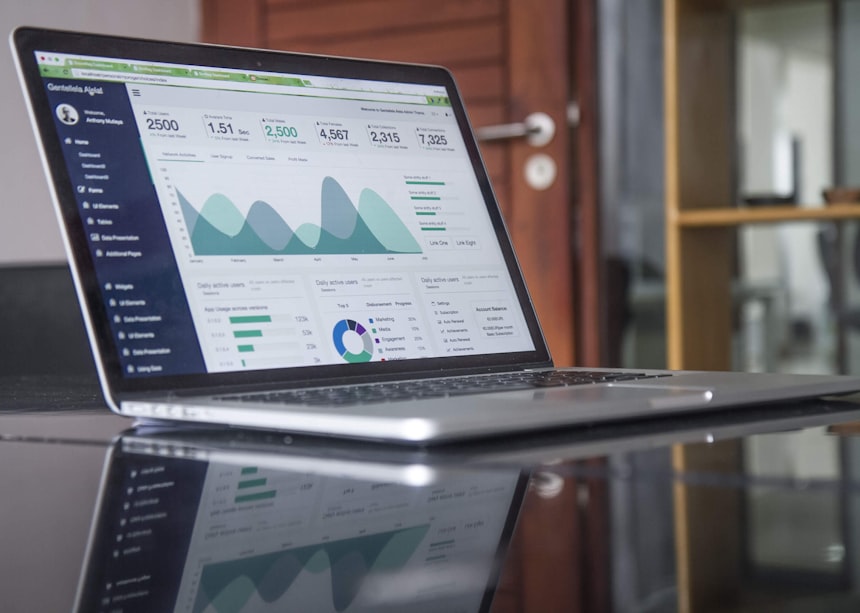
Most eCommerce marketing budgets are 80% acquisition and 20% retention — the exact opposite of what the statistics recommend. Acquiring a new customer costs 5 times more than retaining a current customer, and increasing buyer retention by just 5% will boost revenue by 25-95% by 2026. The fastest growing companies are those with built systematic, data-capturing pipelines that capture more risk customers than the earlier ones
📊 To track key retention measures
Make the purchase price again: Aim for 25-40% for healthy retention
Customer Lifetime Value (CLV): Benchmarks vs. Acquisition Charges
Days Between Orders: Your average repurchase cycle — trigger emails before it expires
Churn Rate: % of customers with no purchase in 90+ days
Net Promoter Score (NPS): Monthly survey — your early warning system
🎯 Retention Interventions
VIP tier upgrade emails when customers hit spend thresholds
Birthday rewards — personalised discount on customer birthdays
Milestone rewards — "You've made 5 orders — here's a gift."
Lapse prevention — email at 60% of the average order cycle
Exclusive product previews for top-spending segments

Cross-border eCommerce is growing at twice the rate of domestic eCommerce — yet most store owners have never seriously considered international expansion. If you are selling in the UK, there are 7 billion potential customers in markets you have never targeted. Modern Shopify Markets, translated storefronts, and global payment processors have reduced the barrier to international selling to near zero. You don’t need warehouses all over the US. You don't have to speak every language. You need a translated product page, a local payment method, and a reliable shipping partner — and you can often find all three within a week.
📋 International Expansion Quick Start
Identify your herbal markets first: Look at your Google Analytics for global visitors to natural sites — you can already get global traffic from those who can’t afford to buy
Add local payment methods: Klarna for Germany/Scandinavia, iDEAL for the Netherlands, PayNow for Singapore — local methods increase conversion by 30-60% vs card-only
Translate your top 10 products first: Use DeepL or Shopify's built-in translation for your best-sellers — do not translate everything at once
Use Shopify Markets: Automatic currency conversion, duty calculation, and localised checkout reduce the technical complexity of international selling dramatically
11 Essential eCommerce Growth Tools for 2026
These are the specific tools I recommend to clients at each stage of growth — categorised by the strategy they support:
| Strategy | Tool | Free Plan | Best For |
|---|---|---|---|
| CRO | Hotjar | ✓ Free tier | Heatmaps, session recordings, friction detection |
| Email Automation | Klaviyo | ✓ Up to 500 contacts | Industry-leading eCommerce email flows |
| Reviews & UGC | Yotpo | ✓ Free plan | Photo reviews, loyalty, referrals |
| Referral Programme | Smile.io | ✓ Free plan | Points, referrals, and VIP tiers |
| Cart Abandonment | Klaviyo | ✓ Included | Email + SMS abandonment flows |
| Subscriptions | Recharge | ✕ Paid only | Best Shopify subscription platform |
| Personalisation | Rebuy Engine | ✕ From $99/mo | AI recommendations for Shopify |
| SEO | Google Search Console | ✓ Free forever | Organic traffic insights and keyword data |
| Analytics | Google Analytics 4 | ✓ Free forever | Full funnel analytics and attribution |
| International | Shopify Markets | ✓ Included in Shopify | Multi-currency, duty, and localisation |


0 Comments