Artificial intelligence (AI) is a division of computer science concerned with creating smart machines that behave and react like humans. It involves the evolution of Procedures and calculator programs adequate for performing tasks generally necessary for work, such as arsenic optic sensing, language credit decision-making, and speech translation

How to Collaborate with AI in Art Projects
Art & Technology · Creative AI
How to Collaborate with AI in Art Projects
Artificial Intelligence is now one of the most exciting creative partners available to artists. Whether you paint, draw, sculpt, or design — AI can help you go further, faster, and in directions you never imagined working alone.
By gotest24 Editorial | April 11, 2026 | Category: Art & Creative Technology | Reading time: 10 min
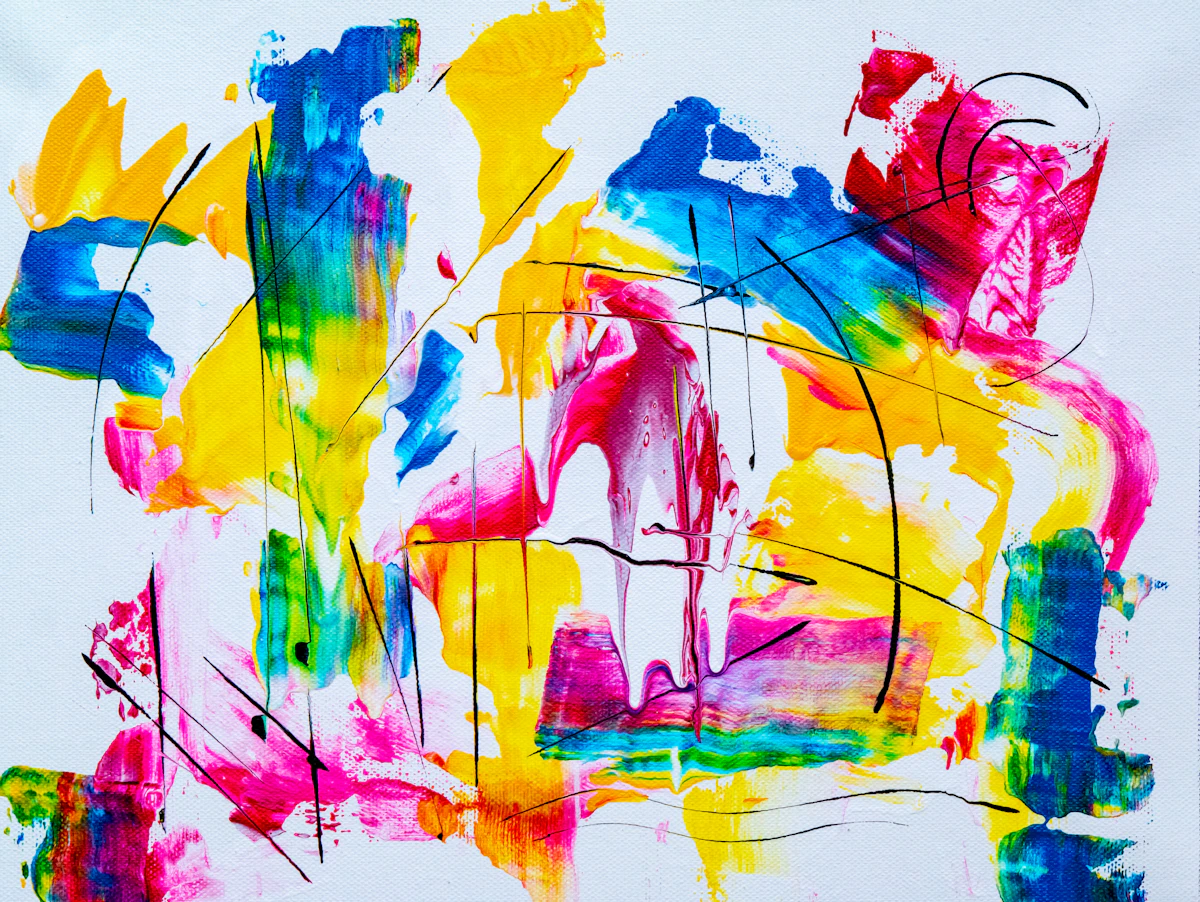
In 2026, AI has become a genuine creative partner for artists across every medium — from digital illustration to traditional painting, sculpture, and film. | Source: Unsplash
|
300M+
AI images generated monthly
|
$0
Cost to start with free AI tools
|
10×
Faster concept ideation with AI
|
2026
AI art is mainstream & growing
|
What Does It Mean to Collaborate with AI in Art?
Collaborating with AI in art does not mean letting a machine make your artwork for you. It means using AI as a creative partner — one that can generate ideas, suggest visual directions, produce references, remix styles, and help you break through creative blocks. Your artistic vision, voice, and final judgement remain entirely yours.
Think of it the way a painter might use a camera for visual reference, or a sculptor might use a 3D printer for prototyping. AI is a powerful new tool in the creative toolkit — one that rewards artists who learn to work with it intentionally and thoughtfully.
According to research from Adobe's Creative Futures Report 2025, over 60% of professional digital artists now use AI tools in at least one stage of their creative process — and that number is growing rapidly every quarter.

AI tools have become standard in professional creative studios worldwide. | Unsplash
Why Artists Are Embracing AI Collaboration
The most forward-thinking artists of 2026 are not afraid of AI — they are excited by it. Here is why so many creatives are actively choosing to collaborate with AI in their practice:
Key Benefits of AI Art Collaboration
Speed of ideation — AI generates hundreds of visual concepts in minutes, giving you a vast pool of starting points to react to and develop.
Style exploration — Experiment with artistic styles, colour palettes, and compositions without committing hours of manual work to each experiment.
Breaking creative blocks — When you are stuck, AI offers unexpected directions that spark entirely new ideas and perspectives.
Expanding skill range — Produce work in mediums you have not mastered — 3D rendering, animation, graphic design — with AI assistance.
Scale and productivity — AI enables solo artists to produce body-of-work quantities that previously required an entire studio team.
The Best AI Tools for Art Collaboration in 2026
Before you begin collaborating, you need to know which tools are best suited to your artistic practice. Here are the six leading AI art platforms in 2026:
Tool 01
Midjourney
The most popular AI image generation tool among professional artists. Produces stunning, painterly images from text descriptions. Excellent for concept art, illustration, and visual development. Best quality output available.
Visit: midjourney.com
Tool 02
Adobe Firefly
Built directly into Adobe Creative Cloud. Perfect for artists already working in Photoshop and Illustrator. Firefly generates commercially safe images and integrates seamlessly into professional workflows. Ideal for client work.
Visit: firefly.adobe.com
Tool 03
DALL-E 3 (via ChatGPT)
OpenAI's image generator is excellent for precise, detailed prompts. Strong at following specific artistic briefs and producing clean variations on a theme. Available to all ChatGPT Plus users.
Visit: openai.com/dall-e-3
Tool 04
Stable Diffusion
An open-source AI image model that can be run locally on your own computer. Offers the highest level of customisation and control. Favoured by technically minded artists who want to train their own visual models.
Visit: stability.ai
Tool 05
RunwayML
The leading AI tool for video art and animation. Allows artists to generate, edit, and transform video footage using AI. Excellent for experimental film, music videos, and motion-based art projects.
Visit: runwayml.com

AI-generated art begins with a human prompt and grows through a creative conversation between artist and machine. | Unsplash
How to Collaborate with AI in Art — Step by Step
Define Your Creative Vision First
Before opening any AI tool, ask yourself: What emotion or idea am I expressing? What is the subject of this piece? What artistic style and mood am I aiming for? AI collaboration works best when you direct it — not when you let it decide everything for you.
Write a Strong, Detailed Prompt
The quality of AI output depends almost entirely on the quality of your prompt. Include: subject, artistic style, mood, colour palette, medium (oil painting, watercolour, digital), and composition (wide shot, close-up, bird's eye view).
Weak prompt: "a forest."
Strong prompt: "A dense ancient forest at dusk, shafts of golden light breaking through the canopy, rich emerald greens and deep shadows, painterly style inspired by Caspar David Friedrich, atmospheric and mysterious, wide landscape format"
Generate Many Variations — Do Not Settle for the First Result
Generate 10, 20, or even 50 variations of your prompt — adjusting wording, style references, and composition each time. Treat this like a sketching session. You are looking for unexpected results that spark your imagination and take the work somewhere new.
Use AI Output as a Starting Point — Not a Finished Product
Take the AI-generated image into your own software. Repaint or redraw it in your own style. Use it as a colour reference for a traditional painting. Extract a compositional structure and rebuild it manually. Combine elements from multiple outputs into one original work.
Iterate and Refine Through Conversation
AI collaboration is not a one-step process — it is a creative conversation. Refine your prompts based on what you see. Use inpainting to edit specific areas. Each round of generation gets you closer to your vision.
Add Your Human Layer — This Is What Makes It Art
The final step is adding what no AI can replicate: your personal history, emotional response, cultural understanding, and artistic judgment. Your curation and decision-making are what make the work meaningful. This is the difference between AI-assisted art and AI-generated art.
“AI will not replace artists who understand their own voice. It will amplify those who do — and it will replace those who do not have one yet.”
— Refik Anadol, AI Artist & Media Artist
10 AI Art Collaboration Project Ideas
Not sure where to start? Here are ten project ideas that work beautifully with AI collaboration:
| # | Project | Description |
|---|---|---|
| 1 | Portrait Series | Generate AI portraits and rework them in your preferred traditional medium |
| 2 | Dreamscape Illustrations | Use AI to visualise dream imagery, subconscious landscapes, and surreal environments |
| 3 | Historical Reimagining | Recreate historical scenes or artworks reimagined in contemporary styles |
| 4 | Abstract Emotion Studies | Generate abstract visuals based on emotional states, music, or poetry |
| 5 | Book Cover Concepts | Develop cover art concepts for fictional or real books and publications |
| 6 | Architectural Fantasy | Imagine impossible buildings, utopian cities, or fantastical living environments |
| 7 | Character Design | Rapidly prototype character concepts for illustration, games, or animation |
| 8 | Pattern & Textile Design | Generate repeating patterns for fabric, wallpaper, or product surface design |
| 9 | Album Artwork | Develop striking visual concepts for music releases and artist branding |
| 10 | Environmental Concept Art | Design fictional worlds and environments for games, films, or graphic novels |
Ethical Considerations for AI Art Collaboration
Important — Ethical Guidelines
Be transparent about AI use. Many galleries, competitions, and clients require disclosure when AI tools are used. Always be honest about your process.
Understand copyright. The legal status of AI-generated art varies by country and is evolving. Stay informed about developments in your jurisdiction.
Respect other artists' styles. Use style references as inspiration and direction — not as a means of directly copying a living artist's work.
Do not misrepresent AI-assisted work as entirely hand-made. Transparency builds long-term trust with your audience and the art community.

What AI Cannot Replace in Art?
AI is extraordinary — but it cannot replace your lived experience and personal story, your cultural background and emotional depth, your taste and aesthetic judgement, your relationship with your audience, or your ability to make work that is genuinely meaningful to people who know you.
These are the things that make art matter. AI accelerates the production of images — it cannot produce meaning. That is your job, and it always will be.
Frequently Asked Questions
Can beginners collaborate with AI in art projects?
Yes. Tools like Midjourney and Adobe Firefly require no technical skills whatsoever. If you can type a description of what you want to see, you can begin generating AI imagery and start collaborating immediately. Most beginners produce usable results within their first hour.
Does using AI make my artwork less original?
No more than using a camera, projector, or Pantone colour guide makes art less original. AI is a tool. Originality comes from your creative vision, your choices, how you develop the work, and your artistic voice. Many of the most original and celebrated artists of 2026 use AI extensively in their practice.
Which AI tool is best for art collaboration?
Midjourney produces the highest quality painterly images and is the favourite of professional illustrators and concept artists. Adobe Firefly is best for artists already working in Creative Cloud. DALL-E 3 is excellent for precise creative briefs. The best tool depends on your artistic style and workflow.
Do I need to disclose that I used AI in my artwork?
In most professional contexts, yes. Galleries, art competitions, and many clients now require disclosure when AI tools are used in the creation of artwork. Being transparent about your creative process is both ethically correct and increasingly an industry standard expectation.
Will AI replace human artists?
AI will not replace artists who understand their own voice and use AI intentionally as a tool. It may replace artists producing generic, undifferentiated work without a clear point of view — because AI can produce that faster and cheaper. The answer for every artist is to develop a stronger, clearer, more personal artistic identity.
Useful Resources & External Links
Midjourney — AI Image Generation Platform ↗
The most widely used AI art tool for professional creatives
Adobe Firefly — AI Creative Tools ↗
Integrated into Photoshop and Illustrator — industry standard
RunwayML — AI Video and Motion Art ↗
Best platform for AI-assisted video art and animation
Stability AI — Stable Diffusion Open Source ↗
Open-source AI image model for advanced customisation
Tate Modern — AI and Art Guide ↗
Official Tate guide to understanding AI in contemporary art
Creative Commons — Copyright & Licensing ↗
Understanding copyright for AI-generated and AI-assisted artwork


0 Comments